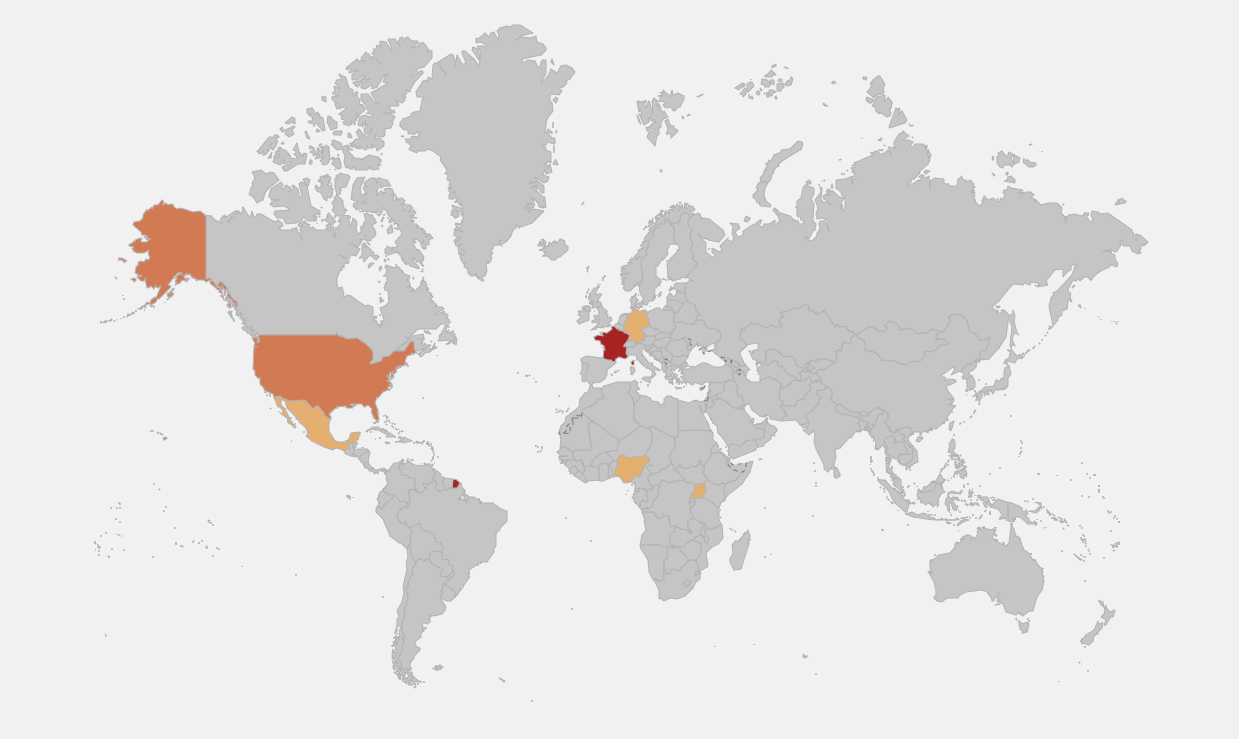
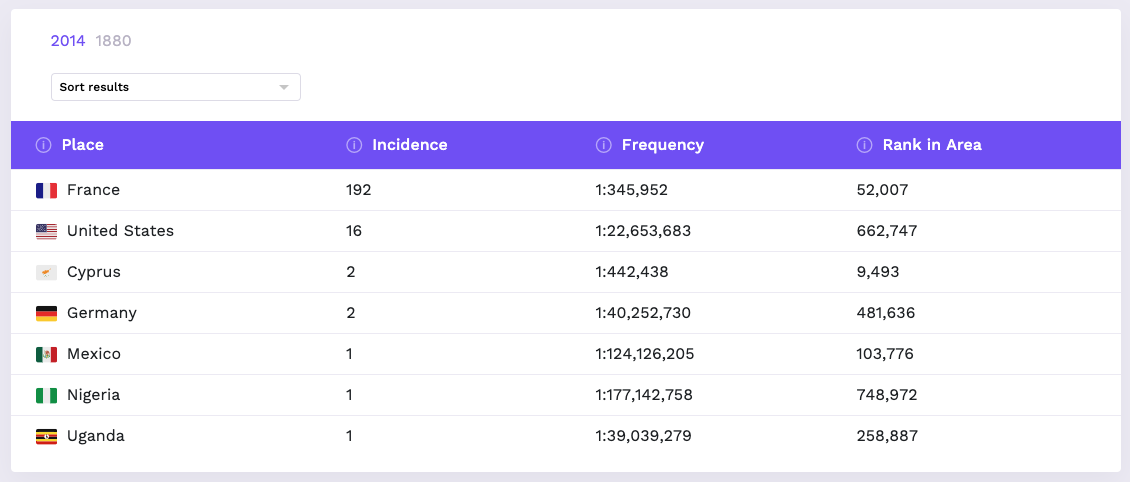

The Lyet story is rooted in Franche-Comté, in eastern France — a region of limestone hills, river valleys, and small farming and dairy villages along the Doubs. The earliest French record of the name dates to 1758, in the village of Routelle, and for generations afterward the family appears in the registers of the surrounding countryside: Osselle, Lantenne, Cléron, Fourg, and the regional capital of Besançon. The name remains anchored there today — of the 192 Lyets in France, more than half still live in Bourgogne-Franche-Comté.
The records describe quiet, rooted lives. Marie Pélagie Lyet was born in Osselle in 1861 and died in 1938 in Pirey, only a few kilometers away. Marie Françoise Lyet was born in Besançon in 1841; Jean-François Lyet and his descendants appear in the same parish records through the nineteenth century, under spellings that drift between Lyet, Liet, Lye, and Liat. The name's origin is uncertain — a popular account traces it to an Old French root associated with joy or high spirits, though this remains unverified folk etymology. An older English thread, Elizabeth Lyet of Manston, Dorset, born 1592, was long taken as the earliest record of the name, but is now believed to be a coincidental spelling unrelated to the French family.
In the mid-nineteenth century, the name crossed the Atlantic. Nicolas François Lyet, born in France around 1824, died in Philadelphia in 1898; his son Louis Claude, born in Paris in 1855, made the same journey and settled there. From that foothold the family spread through Pennsylvania, New Jersey, Connecticut, and Ohio, with four generations recorded in Philadelphia between the 1880s and the 1980s. Exactly how this line connects to the next chapter is the last open question in the family's research — the ship manifests and Philadelphia census pages that would close the gap are still being pulled.
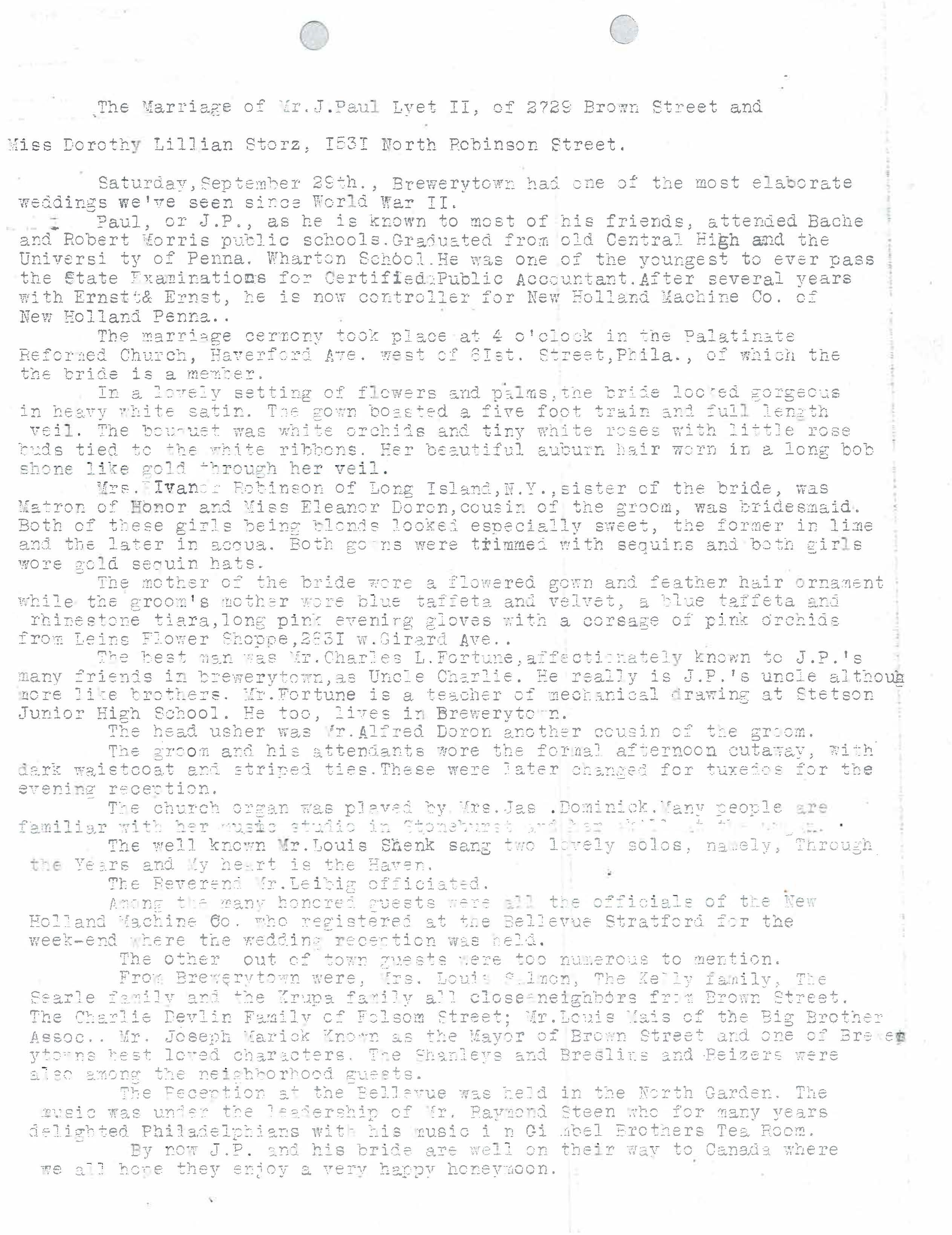
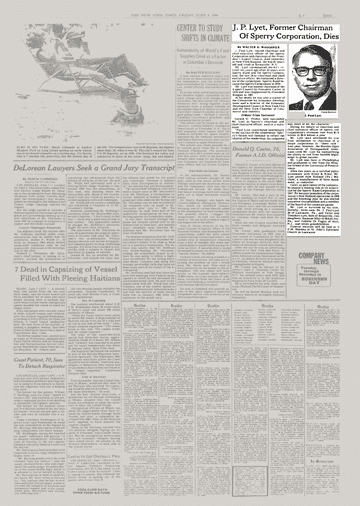
That next chapter belongs to J. Paul Lyet II (1917–1984). Born in north Philadelphia to French immigrant parents — his father remembered as a professional trumpet player, his mother a telephone operator — he grew up poor after his parents divorced when he was eight, worked a factory floor and sold real estate to pay his way through Wharton's evening school of accounting, and graduated in 1941. In 1945 he married Dorothy Storz and moved to Lancaster, Pennsylvania as comptroller of the New Holland Machine Company; when Sperry acquired the firm a year later, his rise began — executive vice president in 1970, president in 1971, chairman and chief executive in 1972. In his decade at the top, Sperry's revenues tripled from $1.8 to $5.6 billion, and he chaired the President's Export Council under both Carter and Reagan. He received the Horatio Alger Award in 1983, a year after retiring.
Through all of it, the name has stayed genuinely rare. Fewer than a thousand Lyets are estimated worldwide today — nine in ten of them in Europe — a scattering of families across France, Germany, and the United States, each carrying a piece of the same long story.